What Every Sri Lankan Should Know About Choking Emergencies
Choking is a life-threatening emergency that can happen to anyone, anywhere — at home during a family rice and curry meal, at a wedding buffet, or while children are snacking on small foods. Knowing what to do in those critical moments can save a life.
What Is Choking?
Choking happens when a piece of food or an object gets stuck in the throat or windpipe, blocking the flow of air to the lungs. If the airway is completely blocked, the person cannot breathe, speak, or cough, and this can become fatal within minutes.
Common Causes of Choking in Sri Lanka
- Food items: Large pieces of rice, bread, meat, fish bones (especially common with our love for fish curries), boiled eggs, and sweets like kavum or kokis
- Children: Small toys, coins, buttons, seeds (like jambu or nelli seeds), grapes, peanuts, and small pieces of wade
- Elderly: Difficulty swallowing due to age, dentures, or medical conditions
- Eating too fast: Especially during busy workdays or festive occasions
How to Recognise Choking
Mild Choking (Partial Blockage)
- The person can still cough, speak, or breathe
- They may wheeze or make high-pitched sounds
Severe Choking (Complete Blockage)
- Cannot speak, cry, or make noise
- Cannot cough or breathe
- Clutching the throat with hands (universal choking sign)
- Face turns red, then blue
- Loss of consciousness if not treated quickly
What to Do: Step-by-Step First Aid
For a Conscious Adult or Child (Over 1 Year)
Step 1 — Encourage Coughing
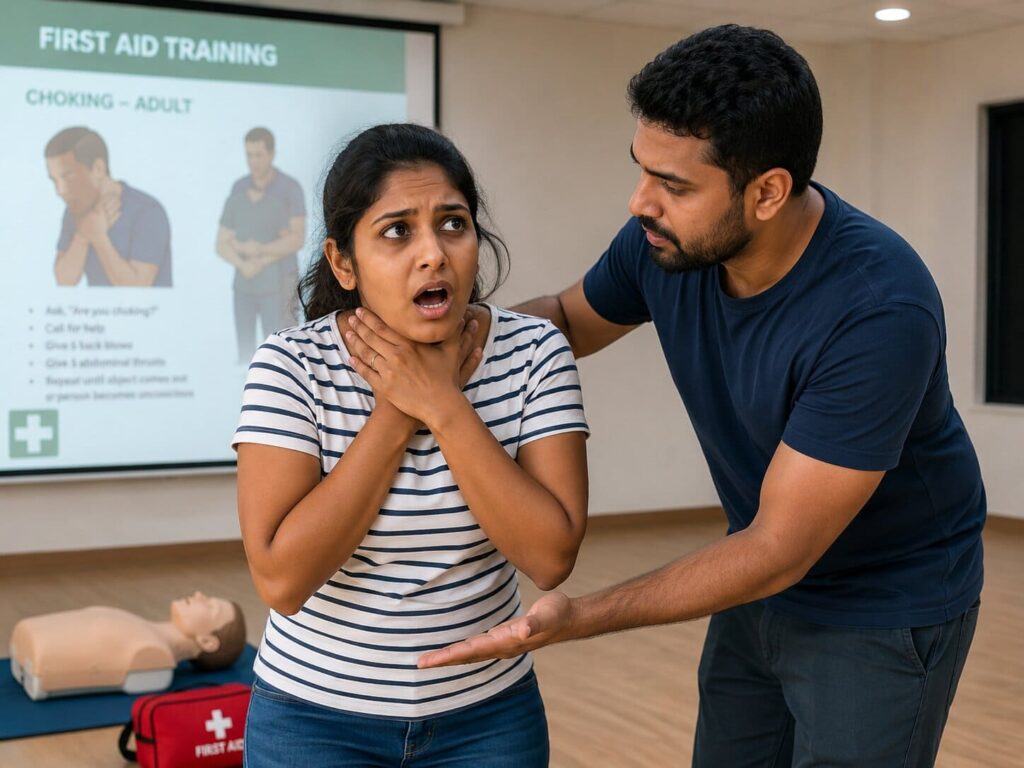
If the person can cough, encourage them to keep coughing hard. Coughing is the body’s natural way of clearing the airway. Do not interfere if they can cough forcefully.
Step 2 — Give 5 Back Blows
If coughing doesn’t work:
- Stand behind the person and slightly to one side
- Support their chest with one hand and lean them forward
- Give 5 firm back blows between the shoulder blades using the heel of your hand
- Check after each blow to see if the blockage has cleared
Step 3 — Give 5 Abdominal Thrusts (Heimlich Manoeuvre)
If back blows don’t work:
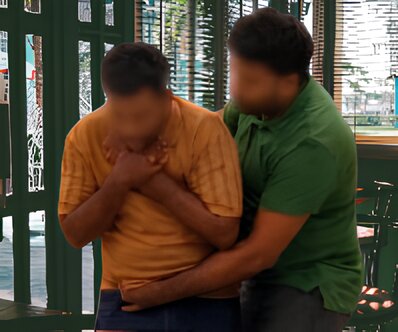
- Stand behind the person and wrap your arms around their waist
- Make a fist with one hand and place it just above the belly button (navel), below the ribcage
- Grasp your fist with the other hand
- Pull sharply inward and upward — 5 times
- Check if the object has been dislodged after each thrust
Step 4 — Repeat
- Alternate between 5 back blows and 5 abdominal thrusts until the object comes out, the person can breathe/cough, or they become unconscious
If You Are Alone and Choking
- Call 1990 immediately if you can
- Make a fist and place it above your belly button
- Use your other hand to push your fist inward and upward
- Or lean over a hard surface like the back of a chair, edge of a table, or kitchen counter, and thrust your upper abdomen against it
- Repeat until the object comes out
Prevention Tips for Sri Lankan Households
For Children
- Cut food into small pieces — especially grapes, sausages, and meat
- Avoid giving young children hard foods like peanuts, kadala, popcorn, or boiled chickpeas
- Keep small objects away — coins, buttons, pen caps, small toy parts, and batteries
- Always supervise children while eating
- Teach children to sit down while eating — no running or playing with food in the mouth
For Adults and Elderly
- Chew food thoroughly before swallowing — take your time, especially with fish (watch out for bones!)
- Avoid talking and laughing with a full mouth during meals
- Be extra careful with sticky foods like kiribath, pittu, or dry bread
- Elderly family members with dentures or swallowing difficulties should eat soft, well-cooked foods
- Cut meat into smaller pieces and remove fish bones carefully before serving elderly family members
Final Thoughts
Choking accidents are frighteningly common, and they often happen at home during everyday meals. In Sri Lanka, we enjoy our food together as families — around the dining table, at dane gatherings, and during festivals like Avurudu and weddings. These are joyful moments, but they can turn dangerous in seconds.
You don’t need to be a doctor to save a life. Learning these simple first aid steps can make the difference between life and death. Share this post with your family and friends — because the person who saves a life tomorrow might be you.
Stay safe